
Introduction
Cardiovascular diseases (CVD) continue to be a major cause of morbidity and mortality, despite the fact that their incidence and associated mortality are being reduced in many European countries. Poland, based on the values of national CVD mortality rates (published by WHO), was classified with: Albania, Bosnia and Herzegovina, Croatia, the Czech Republic, Estonia, Hungary, Kazakhstan, Slovakia and Türkiye among the high-risk CVD countries [1,2].
In the past few decades, major CVD risk factors have been identified. Among the most important, modifiable, causal CVD risk factors, researchers list low-density lipoprotein (LDL), high blood pressure (BP), diabetes mellitus (DM), smoking and obesity [1]. At the same time, it has been shown that the most important element in the primary and secondary prevention of CVD is the promotion of a healthy lifestyle, including physical activity and rational nutrition. A healthy diet has been recognized as the basis for CVD prevention in all individuals, regardless of risk group (strength of evidence I A) [1]. In this aspect, experts recommend implementing a dietary style based on fiber-rich plant foods (whole grains, fruits, vegetables, legumes and nuts) [1]. The recommended level of fiber intake was considered to be 30-45 g per day. At the same time, each additional intake of 7 g/day of fiber has been shown to be associated with a 9% lower risk of heart disease (RR, 0.91) [1]. In contrast, an additional intake of 10 g/day of fiber reduced the risk of stroke by 16 percentage points (RR 0.84) and the risk of type 2 diabetes by 6 percentage points (RR, 0.94) [1]. It has also been shown that high fiber intake can regulate postprandial glycemia, as well as lower triglyceride levels [1].
Unfortunately, the results of observational studies suggest that the frequency of adherence to healthy lifestyle principles remains low, and CVD risk factors are often poorly treated, even in high-risk CVD patients [1,2]. In light of the research available in scientific literature, it seems that a certain alternative in the care of a patient at risk with CVD may be to enrich the diet with a fiber-based plant product such as Plantago ovata husk (psyllium husk, P. ovata husk).
P. ovata is a common medicinal plant widely cultivated in tropical regions of the world, such as India, Iran, Egypt, Afghanistan, North Africa, as well as in China, Spain and the Canary Islands [3,4]. The outer covering of P. ovata seeds (referred to as Plantago ovata husk or psyllium husk), obtained by cleaning the seeds, contains soluble and insoluble fiber in a 70:30 ratio, making products containing psyllium husk an ideal source, beneficial to health, of fiber [4]. Psyllium husk, extracted from the seeds of P. ovata, consists of a highly branched, gel-forming arabinoxylan – a polymer rich in arabinose and xylose – in an aqueous environment [3,4]. The results of clinical studies indicate that the bonds present in P. ovata husk are only slightly hydrolyzed in the human gastrointestinal tract, which is a definite advantage, since consumption should not cause bloating. It has also been shown that probiotic bacteria present in the human digestive tract can utilize the oligosaccharides and their component sugars (arabinose and xylose) present in P. ovata husk as an energy substrate [3-6]. Because of the above, psyllium is considered a fiber with prebiotic potential. In addition, various bioactive compounds such as short-chain fatty acids, amino acids, polyphenols and flavonoids are present in P. ovata husk.
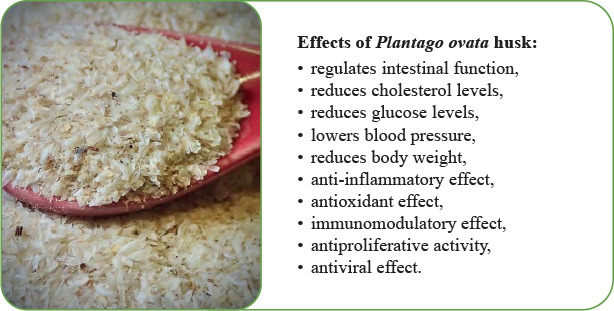
Among the best-documented, with the results of clinical studies, therapeutic activities of P. ovata husk are: beneficial effects on intestinal health and preventive and therapeutic effects in cardiovascular diseases, following the reduction of: cholesterol levels, postprandial glycemia, blood pressure values and body weight (Figure 1) [3-6].
Aim of the work
This article presents the results of studies available in literature indicating the therapeutic potential of P. ovata husk in the prevention and treatment of metabolic diseases such as hyperlipidemia, diabetes and hypertension and explains the mechanism of this action.
Methods
This is a narrative review summarizing scientific reports from 1998-2023 on possible non-pharmacological adjunctive treatments for hyperlipidemia, diabetes and hypertension. To meet the objective, scientific publications were reviewed in PubMed, Medline and EMBASE databases, entering the keywords: Plantago ovata husk, functional fiber, hyperlipidemia, diabetes, hypertension. Only publications written in English were included in the search. Another criterion was to include studies that used P. ovata fiber supplementation. Studies describing the effects of Psyllium plantain were not included. This is because of the differences in the content of the various fiber fractions. Psyllium, unlike P. ovata, is characterized by a higher content of insoluble fiber, and thus may give more complications due to the irritating properties of insoluble fiber. Finally, only clinical trials (5 randomized controlled studies) and meta-analyses of clinical trials (5 meta-analyses) available in literature were considered to describe the health benefits of P. ovata. The results of biological studies were not included in the study.
Literature review results
Hypolipemic effects of P. ovata husk
The efficacy of P. ovata husk in reducing elevated serum cholesterol levels has been evaluated in 21 randomized, well-controlled clinical trials (>1,500 subjects), and the FDA has issued a clinical evidence-based statement that psyllium seed husk soluble fiber can reduce the risk of cardiovascular disease by lowering cholesterol levels [7,8]. The results of all published studies have shown the significant efficacy of psyllium supplementation at doses of 6 to 15 g/24 h (most commonly 10 g/24 h) in reducing cholesterol concentrations, ranging from 6% to 24% for LDL cholesterol and 2% to 20% for total cholesterol [7]. At the same time, they emphasized the fact that the effectiveness of psyllium was greatest in patients with high baseline cholesterol levels and in studies in which no additional dietary restrictions were introduced.
A randomized trial published in 2017 evaluated the effect of psyllium husk supplementation (10.2 g/24 h, in 3 divided doses of 3.5 g before meals) compared to wheat dextrin, a semi-synthetic, easily fermentable fiber (10.5 g/24 h, used as a placebo in divided doses before meals) [9]. The study lasted 3 months and included a group of 20 adult patients diagnosed with hypercholesterolemia who were eating a usual diet. The results showed that psyllium consumption statistically significantly (p<0.05), compared to placebo (wheat dextrin), lowered serum levels of both LDL-cholesterol (-17%) and total cholesterol (-11%). The authors noted no significant effect of psyllium therapy on HDL-cholesterol and triglyceride levels [9].
The efficacy of P. ovata husk in reducing serum LDL-cholesterol levels (-12.8 mg/dL) was also confirmed in a meta-analysis of 28 studies (n=1924) published in 2018, in which the median dose of psyllium was 10.2 g/24 h and the duration of follow-up was 8 weeks [10]. The authors of the cited review inferred that the efficacy of psyllium supplementation in improving serum lipid markers could be a potential factor in delaying the process of atherosclerosis-related cardiovascular disease risk, and this is true both in people with and without hypercholesterolemia [10].
Moreover, the results of available studies indicate that P. ovata husk exerts a synergistic effect with statins in reducing cholesterol levels. Brum et al. in a meta-analysis of 3 clinical trials (lasting 4-12 weeks) showed that statin treatment in combination with psyllium (averaging 10.8 g/24 h in divided doses before meals) provided a clinically and statistically (p=0.001) greater benefit in cholesterol reduction compared to statin therapy alone [11]. The authors noted that the addition of psyllium to a statin treatment regimen resulted in LDL-cholesterol reductions equivalent to doubling the statin dose. This may be particularly important for patients who cannot tolerate higher doses of statin drugs.
The mechanism of the hypolipemic effect of psyllium is related, among other things, to the uptake of bile acids by the mucogel structure and their elimination with the feces [7,12-14]. Unlike the process of nutrient absorption, which can occur along the entire length of the small intestine (with a surface area of about 250 m2), active reabsorption of bile acids occurs only in the distal segment of the ileum. Decreased enterohepatic reabsorption of bile acids results in a reduction in their concentration in the blood and a secondary compensatory response of hepatocytes. There is an increase in the expression of LDL receptors in liver cells, which facilitates the uptake of LDL-cholesterol from the blood to increase the synthesis of bile acids. This compensatory action of hepatocytes leads to a reduction in serum levels of the LDL-cholesterol fraction and total cholesterol (without affecting HDL-cholesterol levels). It has been shown that the therapeutic effect of cholesterol reduction is a phenomenon dependent on the viscosity of the fiber, and only gel-forming fibers have sufficient viscosity to significantly reduce cholesterol levels [15]. It is also worth noting that, according to observations made by Noureddin et al., the beneficial effects of P. ovata husk associated with hypolipemic effects persist for up to four weeks after supplementation is discontinued, suggesting a lasting effect of psyllium on lipid levels, at least during this short 4-week period [16].
Hypoglycemic effects of P. ovata husk
More than four decades ago, David Jenkins showed that the effectiveness of fiber supplementation in reducing peak postprandial blood glucose concentration is proportional to the degree of viscosity of the fiber, and only fiber with gel-forming properties can be effective in modifying postprandial hyperglycemia [17]. The observations made by Jenkins in the 1970s are confirmed by current literature. Moreover, a study published by Noureddin et al. shows that the hypoglycemic effect of psyllium husk persists for up to four weeks after supplementation [16].
A review including 8 meta-analyses of 35 randomized controlled clinical trials reported that psyllium taken before meals (an average of 10 g/24 h, in divided doses) significantly lowered both fasting blood glucose (FBG) (-37.0 mg/dL; p<0.001) and glycated hemoglobin (HbA1c) (-10.6 mmol/mol; p=0.048) [18]. An important observation made by the cited researchers was that the glycemic effect of psyllium showed a correlation with baseline FBG. The authors did not observe a significant reduction in glucose levels in euglycemic subjects and, at the same time, showed a moderate reduction (up to -4.7 mg/dL) in patients with pre-diabetes (pre-T2DM). The greatest improvement in glycemia (-37.0 mg/dL) was observed in patients treated for type 2 diabetes mellitus (T2DM) [18]. The moderate values observed, in the cited review, in terms of reduction in plasma glucose levels in the pre-T2DM group (up to -4.7 mg/dL), are consistent with the values reported by Knowler et al. (-4.6 mg/dL) in a group of people at high risk of developing T2DM undergoing preventive metformin therapy [19]. Knowler et al. showed that a 4.6 mg/dL reduction in fasting glucose levels after metformin therapy in adults at high risk of developing T2DM led to a clinically significant reduction in the incidence of T2DM (-31%) compared to the control group. Compile the results published by Gibb et al. and Knowler et al. and one can conclude that the therapeutic efficacy of P. ovata husk in normalizing glycemia in patients with carbohydrate intolerance is comparable to that of metformin [18,19].
There is also clinical evidence in literature for the efficacy of psyllium supplementation in combination therapy with standard treatments for T2DM. A randomized, placebo-controlled trial evaluated the effect of psyllium in 105 patients treated for T2DM (92% treated with sulfonylurea, 8% treated with insulin). More than 50% of eligible subjects had vascular disease [20]. Baseline data was collected for 6 weeks, followed by 6 weeks of P. ovata husk (5 g, 3 times daily before meals) or placebo. The results showed that psyllium lowered fasting blood glucose levels by 34 mg/dL [20]. The reported values were comparable to the level of glycemic reduction described by Gibb et al. (37 mg/dL) [18,20]. The authors noted that the higher dose of psyllium used in the experiment (15 g/24 h) was well tolerated by the participating patients, and no significant side effects were reported [20]. The results of the above-described work clearly indicate the effectiveness of P. ovata husk supplementation in the prevention of diabetes, both when dosed alone and in combination therapy in patients treated for T2DM.
It should be noted that although psyllium ingestion has not been shown to cause hypoglycemic incidents, in patients with T2DM treated with medication, caution should be exercised and blood glucose levels monitored during the first period of combination treatment. Because of the synergistic effect, psyllium use may involve lowering the dose of prescription drugs (e.g. insulin, sulfonylurea). In addition, there are also studies in literature describing the effect of P. ovata husk on the pharmacokinetics of certain drugs, which translates into higher efficacy of pharmacotherapy [21,22]. Díez et al., in an animal model study, observed that P. ovata husk added to rabbits’ feed slowed the rate of gastrointestinal absorption of metformin while increasing the bioavailability of the drug by 34.42% [21].
The hypoglycemic effect of psyllium husk proven in clinical studies is due, like most other biological actions, to the formation of a viscous gel that alters the consistency of digestive juices in the gastrointestinal tract [7,13,14,18]. This, in turn, secondarily impairs the activity of digestive enzymes, including amylolytic enzymes, thus slowing the rate of digestion of complex carbohydrates. The increased viscosity of the intestinal contents also slows the absorption of glucose and reduces its peak postprandial blood concentration. Physiologically, the process of nutrient absorption begins in the upper small intestine. Consumption of P. ovata husk, by slowing the passage of food content and delaying nutrient absorption, creates opportunities for nutrients to reach the distal segment of the small intestine (where nutrients are not normally found). It has been suggested that the presence of nutrients in the ileum may stimulate the intestinal peptide response, associated with the release of ghrelin, peptide YY and GLP-1, among others [23]. Literature data suggest that GLP-1 (glucagon-like peptide 1) has health-promoting effects associated with reduced appetite and increased insulin secretion. Discussing the above study, it is worth highlighting the fact of the safety of psyllium supplementation. According to the researchers, psyllium husk’s slowing of nutrient absorption does not impair the nutritional status of patients even with chronic therapy. This is mainly due to the huge absorption surface of the small intestine and the fact that nutrients are absorbed in the lower sections of the small intestine when psyllium is consumed.
Hypotensive effect of P. ovata husk
Khan et al. suggested that the therapeutic effect of psyllium associated with a reduction in blood pressure values is presumably secondary to weight loss [24]. However, results obtained in an experiment on hypertensive rats showed that psyllium has antihypertensive effects through inhibition of angiotensin-converting enzyme (ACE) activity [25]. The renin-angiotensin-aldosterone system is the main mechanism involved in the process of blood pressure regulation. Among the clinical studies available in literature, the efficacy of psyllium in lowering blood pressure values was demonstrated, among others, in a 6-month study conducted in a population of 141 hypertensive and overweight patients [26]. Consumption of psyllium 3.5 g, 20 minutes before two main meals, significantly improved triglyceride values, as well as systolic (SBP) and diastolic blood pressure (DBP) [26]. Another clinical trial reported similar results among patients with hyperlipidemia [27]. Three-month psyllium supplementation (10.5 g/24 h) reduced the body weight of subjects with lipid disorders (by 1.34%), as well as SBP (by 2.57%) and DBP (by 4.57%) values [27]. Clark et al., in a meta-analysis of 11 studies published in 2020, also showed that psyllium supplementation resulted in a 2.04 mmHg reduction in systolic blood pressure values, and its antihypertensive effect was stronger in subjects with higher baseline blood pressure values [28]. Similarly, another meta-analysis reported that of five different supplemented fibers, only psyllium showed a hypotensive effect, lowering SBP values by 2.39 mmHg [24] (Table 1).
Table 1
Clinically demonstrated health benefits of P. ovata husk supplementation
| Data sources and population | Dose [g/24 h] | Duration [weeks] | Effects of psyllium intake | References |
|---|---|---|---|---|
| Meta-analysis (21 studies; n>1,500) | 6-15 | 8-16 | ↓LDL- C (-6% to -24%) ↓TC (-2% to -20%) | [7] |
| Meta-analysis (28 studies; n=1,924) | 10.2 | 8 | ↓LDL-C (-0.33 mmol/L) ↓Non-HDL cholesterol (-0.39 mmol/L) ↓apoB (-0.05 g/L) | [10] |
| Meta-analysis (3 studies; n=204) | 10.8 | 4-12 | Clinically and statistically (p=0.001) greater benefit in cholesterol reduction compared to statin-only therapy. Adding psyllium to a statin treatment regimen resulted in a reduction in LDL cholesterol equal to a doubling of the statin dose. | [11] |
| Single-blind, randomized controlled study (n=51) | 10.0 | 12 | ↓LDL-C (-11.6 mg/dL) ↓TC (-22.5 mg/dL) ↓TG (-18.6 mg/dL)↑HDL-C (+2.2 mg/dL) ↓FBG (-19.5 mg/dL) | [16] |
| Meta-analysis(35 studies; n=535) | 10.0 | 4-24 | ↓FBG (-37.0 mg/dL) ↓glycated hemoglobin (-10.6 mmol/L) | [18] |
| Double-blind, placebo-controlled study (n=125) | 5.0 | 12 | ↓LDL-C (-28 mg/dL) ↓TC (-26 mg/dL) ↓TG (-49 mg/dL)↑HDL-C (+17 mg/dL) ↓FBG (-8.0 mg/dL) | [20] |
| Open-label, placebo-controlled, randomized trial (n=141) | 7 | 24 | ↓LDL-C (-9 mg/dL) ↓TC (-12 mg/dL) ↓TG (-21 mg/dL) ↓SBP (-5.2 mmHg) ↓DBP (-2.2 mmHg) ↓FBG (-24 mg/dL) | [26] |
| Single-blind, placebo-controlled research study (n=40) | 10 | 12 | ↓LDL-C (-30.2 mg/dL) ↓TC (-29.1 mg/dL) ↓TG (-47.7 mg/dL)↑HDL-C (+2.16 mg/dL) ↓SBP (-2.57 mmHg) ↓DBP (-4.57 mmHg) | [27] |
| Meta-analysis (11 studies, n=592) | 3.7-15 | 4 | ↓SBP (-2.04 mmHg) | [28] |
| Multi-centered, double-blind, placebo-controlled, randomized trial (n=126) | 14.0 | 8-16 | ↓LDL- C (-6%) ↓TC (-6%) ↓TG (-21.6%) ↓ApoB (-6.7%) ↓oxidized LDL (-6.82 U/L) | [37] |
In addition to the above-described mechanisms of therapeutic action, related to the physicochemical properties of P. ovata and its ability to form a gel-like structure in an aqueous environment, another potential therapeutic mechanism reported in literature is the effect of psyllium on changing the intestinal environment [29,30]. The above effect is due to the ability of P. ovata to promote the growth and proliferation in the intestinal lumen of probiotic bacteria and increase the production of endogenous short-chain fatty acids (SCFAs) [29-31]. Colonic bacteria fermenting psyllium produce SCFAs (acetic, propionic and butyric), which exert beneficial clinical effects. SCFAs act as signaling molecules that modulate many physiological processes. The results of available studies indicate that a low intake of soluble dietary fiber results in a reduction of SCFA concentrations in the body. In published clinical studies, polysaccharides from P. ovata have been shown to stimulate the growth of Bifidobacterium in the stools of healthy women and lead to normalization of their titers in the stools of women with reduced Bifidobacterium levels [29]. The authors of the cited study suggested that the effect of psyllium husk on the gut microbiota depends on the baseline state of the subjects’ microbiota. In another clinical experiment, it was shown that consumption of psyllium husk resulted in changes in the composition of the intestinal microbiota in both a group of 8 healthy volunteers and 16 constipated patients, with the observed changes being more significant in the constipated patients [30]. The changes noted included a significant increase after psyllium supplementation of Faecalibacterium ssp., Lachnospira and Phascolarctobacterium, i.e. microorganisms associated with the production of short-chain fatty acids [30].
Dosage – recommended intake of P. ovata husk
According to recommendations from the U.S. Department of Health and Human Services, men and women should consume at least 5 g to 10 g of soluble fiber per day, and 10 g to 25 g to lower high LDL cholesterol [32].
Meanwhile, the most commonly indicated dose of psyllium husk showing therapeutic effect in clinical studies is the amount of 10-15 g/24 h, taken in divided doses (3 times a day at about 3.4-5 g) before main meals [14,33]. Each dose of P. ovata husk should be consumed after dissolving the preparation in an appropriate amount of liquid (about 150-200 ml), preferably water or juice low in FODMAP [33]. In addition, to avoid complications, it is recommended that the patient drink another glass of water after consuming the dose [33].
Safety information on P. ovata husk supplementation
One important aspect related to the safety of psyllium as a functional ingredient in supplements is the degree of processing and purity of these products [32,34]. The FDA issued a statement that the use of psyllium husk in dietary supplements and food products in the amount necessary to achieve the desired therapeutic effect (7-15 g/24 h) was safe and legal when using P. ovata husk with a high degree of purity, a minimum of 95% [32].
When describing the safety issues of P. ovata husk, it is also important to note possible inhalation or oral allergic reactions after ingestion or contact with psyllium-containing products. A review of literature suggests that healthcare workers, pharmaceutical workers and especially those directly involved in the production of psyllium preparations may be at increased risk of allergic reactions due to frequent inhalation exposure to the allergen [35,36].
The U.S. Food and Drug Administration has also identified the possibility of esophageal or intestinal obstruction as important, related to the safety of psyllium consumption [5,33]. Supplementation of psyllium without adequate fluid intake can cause lack of proper passage of the ingested dose of the product, and its swelling in the upper gastrointestinal tract can block the throat or esophagus, which in turn will result in choking. Therefore, it is essential to inform patients about the possible side effects of consuming the product with an inadequate amount of fluids [5,32,33].
Researchers are also considering the question of the safety of long-term psyllium husk supplementation in terms of its effect on the bioavailability of nutrients from the gastrointestinal tract. They wondered whether long-term psyllium husk supplementation could affect the poorer absorption of fat-soluble vitamins (A, D, E and K). It was also supposed that psyllium could bind minerals such as calcium, potassium, magnesium, zinc and iron in its mucilaginous-gel-like structure. However, from the results of clinical trials available in literature, it appears that supplementation with P. ovata husk is safe, well tolerated and does not adversely affect the gastrointestinal bioavailability of vitamins and minerals [37,38].
Contraindications to P. ovata husk therapy
P. ovata husk supplementation is contraindicated: in patients with psyllium allergy, in patients with dysphagia or mechanical obstruction of the gastrointestinal tract and in patients with anatomical changes in the gastrointestinal tract [33]. Preparations from P. ovata husk should also not be consumed by patients with severe protein or protein-energy malnutrition and in patients who are lying down, in whom the smooth muscles of the gastrointestinal tract are weakened with subsequent slowing of intestinal peristalsis [33]. For the same reason, ingestion of psyllium is contraindicated in patients treated with muscle relaxants. Combining psyllium supplementation with antidiarrheal drugs with spasmolytic effects and inhibition of gastrointestinal peristalsis may also pose some clinical risk [33]. The use of psyllium preparations is not recommended in neonates, infants and children under 3 years of age due to the potential danger of choking with available dosage forms [33].
Conclusions
The results of studies and meta-analyses presented in this article, indicating the therapeutic effect of P. ovata husk in the course of cardiovascular diseases (such as hyperlipidemia, diabetes and hypertension), suggest that enrichment of the diet with a fiber plant product such as P. ovata seed husk can be an important element in the care of patients at risk or with cardiovascular disease. Available literature shows that such a safe and inexpensive intervention as enriching the diet with a plant product containing good quality functional fiber improves metabolic parameters. Moreover, the results of available studies indicate that P. ovata husk has a synergistic effect with the action of statins in reducing cholesterol levels. It has also been shown that the effectiveness of P. ovata husk in normalizing glycemia is comparable to that of metformin. In addition, it is worth noting that, according to observations made so far, the beneficial effects of P. ovata husk related to hypolipemic and hypoglycemic effects persist for up to four weeks after supplementation is discontinued. This indicates the potential of psyllium husk for both primary prevention, a first-line strategy for treating CVD risk factors, and secondary prevention, in combination therapy with drugs.
In the authors’ opinion, the results of the studies presented in this article showing the clinical efficacy of P. ovata husk in both the prevention and treatment of individual modifiable CVD risk factors may be helpful to primary care physicians in making effective recommendations for patients at risk of or with cardiovascular disease.
Disclosures and acknowledgements
The authors declare no conflicts of interest with respect to the research, authorship, and/or publication of this article.
This research received no specific grant from any funding agency in the public, commercial, or not-for-profit sectors.
Artificial intelligence (AI) was not used in the creation of the manuscript.